


Add 3, Reduce 2 to healthfully enjoy your favorite meals
Week 7- Add 3, Reduce 2
This week is all about recipe modification and how to make healthier meals without anyone knowing, unless you want to tell them because making the choice to take better care of yourself and/or your family is awesome!
Question: What is your favorite way to enjoy food with family and friends?
From personal experience, I know that when we cook for others or have certain guests over to visit, we don’t want to upset anyone by not providing traditional comfort foods. The good news is we can make simple changes to our favorite foods to make them healthier, without sacrificing taste.
The Dietary Guidelines for Americans provide general healthy recommendations for all people regardless of age or condition. Have you ever heard to eat certain foods if you have this condition or certain foods if you want to improve a certain aspect of your health? If you read nutrition information from the American Heart Association or American Diabetes Association, they recommend following an eating pattern similar to MyPlate, or the Dietary Guidelines for Americans.
A big part of our recommended diet is incorporating more fruits and veggies, as well as whole grains, and reducing added sugars and saturated fats. That’s what we’re going to learn how to do today: Add 3 (fruits, veggies, and whole grains), and Reduce 2 (sugars and saturated fats)
Let’s start with fruits and veggies.
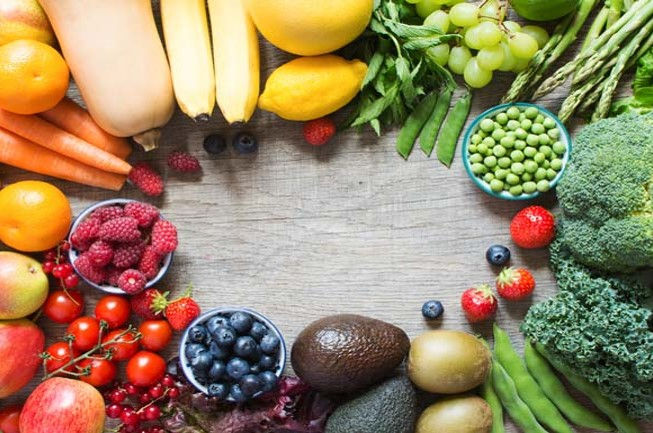
First, we should know how to shop for fresh, frozen, or canned produce. All forms can all contribute to a healthy diet. However, if shopping for canned or frozen, make sure there’s no extra “stuff,” meaning we want our canned veggies with no added salt, and we want our canned fruit in water or 100% juice. The same applies for frozen fruits and veggies. Avoid options that come in a cheesy or salty sauce. We don’t need that extra fat and sodium. We can make our own healthy seasoning or sauce for our frozen fruits and veggies.
Now let’s talk about how to add more fruits and veggies to what we eat. Fruits and veggies are versatile so any time you have a recipe or dish with no fruits and veggies, look for ways to add some. Some easy examples are:
Add shredded vegetables to sauces (shredded zucchini and carrots to a tomato sauce)
Use spriralized veggies
Cook veggies into scrambled eggs, omelets, and frittatas
Add dried fruit to cookie recipes
Top pizza with spinach and pineapple
Add fruit to cereal and/or yogurt

The third “add” is whole grains. Whole grains pack a lot of fiber, as well as vitamins and minerals. When shopping for whole grains check the ingredient list for a first ingredient whole grain. If it says enriched, it’s not a whole grain. Look for whole grain varieties of your favorite pastas, crackers, cereals, and breads.
Aside from purchasing whole grains, you can make recipes healthier by using whole grain flour. When a recipe calls for flour, swap the all-purpose flour for half whole grain flour. For example, if the recipe calls for 1 cup of flour, you would use ½ cup all-purpose flour and ½ cup whole grain flour.
Now let’s talk about Reducing 2:
We need to limit our intake of added sugars and saturated fat. We can do this by modifying our recipes and choosing different foods to add to our recipes.

To reduce added sugar in recipes, you can cut the amount by ¼ to 1/3. * Note- this is not ¼ to 1/3 of a cup. This is ¼ to 1/3 of the entire amount called for. For example, if the recipe calls for ¾ cup of sugar, you could use ½ of a cup and it would go unnoticed. If a recipe calls for 1 and 1/3 c of corn syrup, you could use 7/8 of a cup. This method is not limited to just white sugar. Any type of added sweetener including honey, corn syrup, brown sugar, artificial sweeteners, etc.

To reduce your saturated fat intake, you can buy and cook with lean animal meat or low-fat dairy products. You can also cook with plant oils rather than butter, lard, or shortening. When looking at recipe modification, you can substitute half of the butter in a recipe for half applesauce and half oil. Example: A recipe calls for 1 stick of butter (1/2 cup). You can use ¼ cup of oil and ¼ cup of applesauce.
I’ll give you some examples of modifications I’ve made to recipes to help you get a better idea of how this works.
For Thanksgiving, I love to make a bourbon pecan pie. I make the crust, and I use half whole grain flour and half all-purpose flour. I still use the butter because I was worried it wouldn’t hold together as well with the applesauce and oil, but I’ve been told it should hold together just fine so I’ll be trying that this year! For the filling, I reduced the corn syrup by ¼ the first time I made the pie. No one detected the modifications and they loved it. The next year I reduced the corn syrup by 1/3 and this made the bourbon flavor a lot stronger, so I’ll be going back to the ¼ reduction this year.
I’ve also made mashed potatoes using half potatoes and half cauliflower. My nephews, husband, and grandpa enjoyed them thoroughly and had no idea they were eating cauliflower.
I challenge you to look at your favorite recipes and see how you can modify them to Add 3 and Reduce 2! This will be a great skill to add to your meal planning and meal prepping!
Comments